✶ Requirements, before you book
What you need
to rent and drive
in Tenerife.
Every booking here runs under the same rental conditions, and Spanish road law adds rules of its own. The documents and the card come first, then what the rental asks of you on the road.
✶ Live availability, island wide
139 cars from €17 a day on these dates
Pick-up and drop-off
Dates
Free cancellation on many carsThe deposit is on the car, before you book itPrices in euros, cover levels priced on the car
Pick-up
Dates
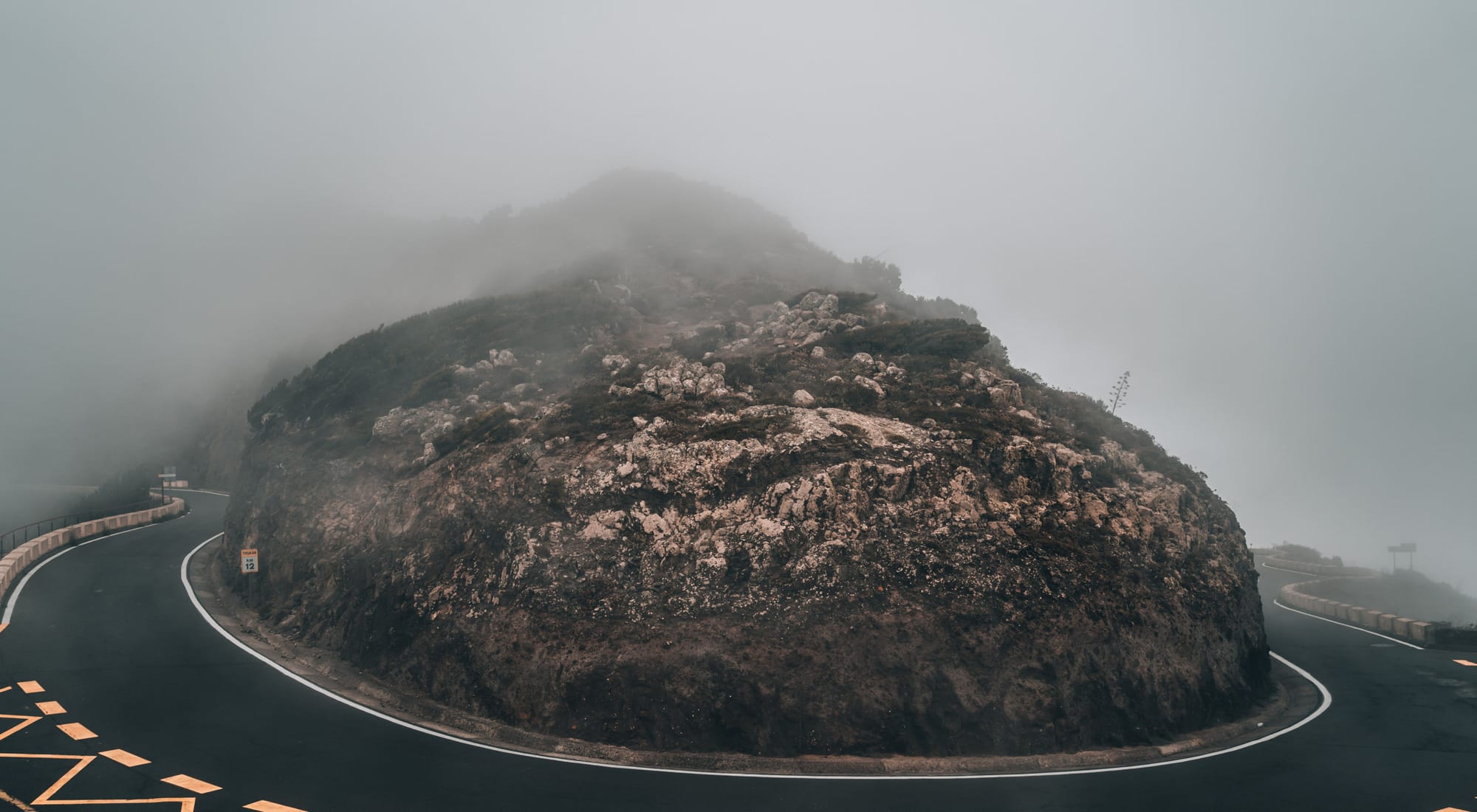 Paved and public, the only kind of road the rental allows
LicenceThe card itselfLatin script, in date to the last day, no copies.
Payment cardDriver's namePhysical and embossed; debit only where the booking says so.
Minimum rental24 hA shorter rental is charged as a full day.
V-16 beaconRequiredReplaced warning triangles on 1 January 2026.
What documents do I need to rent a car here?
A valid national driving licence, as the card itself. Its details have to be in Latin script, its expiry date can be no earlier than the last day of the rental, and copies and electronic licences are not accepted. If your licence is valid only in the country that issued it, an International Driving Permit is strongly recommended alongside it, to show if asked.
With it go the payment card in the main driver's name and the details of the booking: how the rest of the rental is paid, how the deposit is held and when it is refunded are all set out during booking and in the rental voucher. The phone number you booked with, including its country code, has to be reachable on the day before pick-up and for the whole rental, by call or on Viber, WhatsApp or Telegram, and a complaint about the service is not accepted if the renter could not be contacted.
Do I need a credit card, or will a debit card do?
Take a credit card unless the booking says otherwise. The rental conditions state that a physical, embossed credit card in the main driver's name may be required, and that some rental companies accept a debit card, which is then specified during booking and in the voucher. A debit card has to pass the same tests: physical, personalised, embossed and in the main driver's name.
The rule is the same wherever you collect. Both airports hand the car over in the arrival area, and collecting an automatic at TFN instead of at Tenerife South makes no difference to the card the car asks for. Away from the airports, Puerto de la Cruz is the only town with named pick-up points, and in the resort towns the car is brought to your address, so the card has to be there when it arrives.
The deposit is a separate condition. It is set per car, shown on the listing before you book and marked when it is low, and the cars that hold no deposit still state their own card requirement.
What is the minimum age, and can under-25s rent?
It is set car by car. Each car's page lists the minimum age and the driving experience it needs, and these can differ even between similar models, so a young or newly qualified driver may find one listing open and the next one closed. The rental agent has the right to refuse the car at any time if the driver does not meet the requirement for that car, so use the search filters and book a car whose terms you meet.
The gearbox is set per car in the same way, and automatics are a thin slice of the fleet here, found mainly in the compact and crossover classes, so filter for one early if you need it.
Which Spanish road rules does a renter have to follow?
Every hire car on the island is Spanish-registered, so Spanish traffic law applies to it in full. These five rules each carry a fine.
01
Check the V-16 beacon is in the car
An approved, connected V-16 beacon replaced warning triangles in every Spanish-registered vehicle on 1 January 2026. Check that it is in the car at pick-up, because driving without one, or with an unapproved one, is an 80 euro fine.
02
Children of 135 cm and under in the back
In an approved restraint suited to their weight and size, and in the rear seats as the general rule; height decides it, not age. The front passenger seat is allowed only where there are no rear seats, every rear seat is taken by another child in a restraint, or the restraints cannot all be fitted in the back. The fine is 200 euros per unsecured child and 3 licence points, and in a seven seater the third row counts as the rear, which is what renting for a family of six or more turns on.
03
Pets restrained, and never loose in the front
Article 18.1 of the General Traffic Regulations requires the driver to keep full freedom of movement, visibility and attention, so a pet travels in a carrier, an anchored harness or behind a partition. Loose in the back is a fine of 80 to 200 euros; in the front passenger seat it can reach 500 euros, even inside a carrier. The rental conditions go further: small pets only, in their carriers at all times.
04
Blue is metered, white is free, yellow is no
The standard Spanish parking colours apply across the island. Blue lines mark metered bays with a time limit, unmarked white bays are free, and yellow means no parking. Parking charges and parking fines are the renter's to pay.
05
Fixed speed cameras on both motorways
The TF-1 and the TF-5 both carry fixed speed cameras, and the two motorways meet at Santa Cruz. The TF-1 runs past the southern terminal, with a BP at km 0.5 of the Carretera Atogo on it about 1.5 km north. Speeding fines are the renter's to pay like any other.
What does the rental agreement ask of you once you are driving?
Fuel first. Return the car at the level it had when you collected it; below that level the difference is charged at the rental company's rates, and above it you are not compensated. There is no fuel station inside the national park, so if Teide is on the plan for the day, fuel before Teide.
Then time. The minimum chargeable period is 24 hours, so a car returned the same evening is charged as a full day, and keeping it longer than booked means telling the rental agent in advance. A car handed back so dirty that it cannot be inspected is washed at the renter's expense.
Then money. Fuel, parking, fines and tolls are all the renter's to pay, and with the motorways toll-free that comes down to fuel, parking and any fine. Most cars on the island carry no mileage limit, so distance itself costs only fuel.
What does the standard insurance leave out?
The standard level of car rental insurance in Tenerife leaves out damage to four parts of the car: the wheels, the undercarriage, the windscreen and the interior. Each car offers its own cover levels, listed with their prices on the car, so a higher level is something to compare between listings before you book.
Whatever level you choose, the insurance is invalid where damage is deliberate vandalism or comes from neglect.
Where am I allowed to drive a rental car in Tenerife?
On paved public roads only. That is a rental condition, and Tenerife has unsurfaced tracks in Teno and parts of Anaga that look drivable from the tarmac. Leaving the paved road takes the car outside what the rental allows, and the undercarriage sits outside the standard cover in any case.
Some paved roads carry rules of their own. The TF-436 to Masca comes under daytime access control from 09:00 to 16:00 whenever wildfire risk activates it, and while it runs, vehicles driven by visitors purely for sightseeing are turned back; check before setting off, or take the 355 bus. In Santa Cruz, where the card is checked on delivery, a low-emission zone was approved on 24 July 2026 and comes into force in 2029, operating Monday to Saturday from 07:00 to 20:00.
✶ The questions people ask
Licences, tolls,
fines and timing.
Short answers on the points people check before they book a car on the island.
Can I rent a car here on my UK or EU licence?
Yes, if it meets the test the rental conditions apply: a valid national licence with its details in Latin script, still in date on the last day of the rental, presented as the card itself. A UK photocard carries its details in Latin script. An International Driving Permit is strongly recommended only where a licence is valid solely in the country that issued it, so check that point on your own licence before you travel.
Are there tolls in Tenerife?
Not on the motorways: the TF-1 and the TF-5 are toll-free. Tolls sit in the rental conditions alongside fuel, parking and fines as costs the renter pays, so on Tenerife that clause comes down to fuel, parking and any fine.
What happens if I get a fine in a hire car?
It is yours to pay. Fines are the renter's responsibility under the rental conditions, and so are parking charges. Both motorways carry fixed speed cameras, and each of the road rules on this page carries a fine of its own.
What do I do if there is an accident or damage?
Tell the rental agent immediately and get a police report, unless the agent agrees otherwise. Skipping either step cancels the insurance on the car and leaves you fully responsible for the damage.
How far ahead should I book?
Early, for anything specific. Seven seaters are scarce and automatics are a minority of the cars on the island, and into Christmas and winter the cheap end of the list empties first. Booking early also leaves time to check the deposit, the card requirement and the age rule on the car before you travel.
✶ Requirements checked
Then choose the car.
Search your dates, and each car shows its deposit, its cover levels and the minimum age and experience it needs before you book.